
Welcome to NutriAg.

Please select your destination.

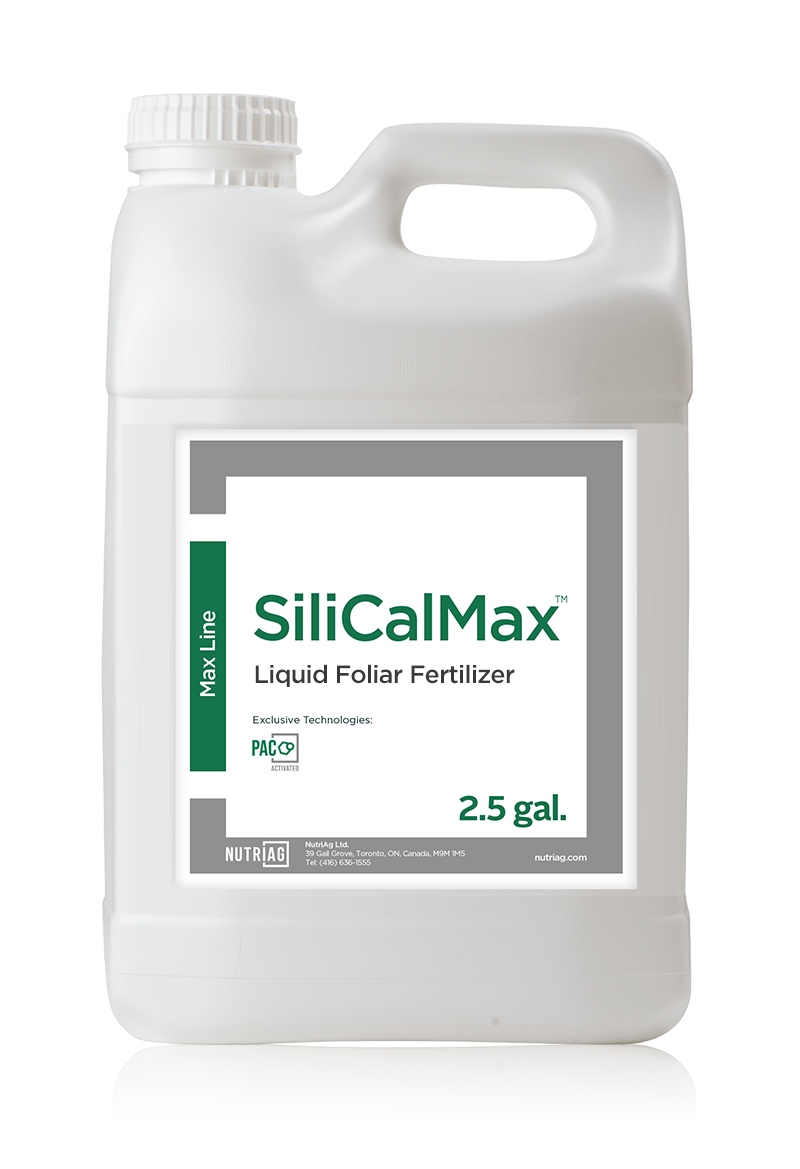
SiliCalMax™

A calcium and boron true solution with PAC® chelation and silicon to improve crop quality and reduce the impacts of abiotic stress.

GUARANTEED ANALYSIS:    
Calcium (Ca) 7.6%
    7.6% Chelated Calcium
Boron (B) 0.47%

Derived from boric acid and calcium hydroxide chelated with
PolyAldoCarbosate®.

Contains 1.0% soluble Silicon.

SUGGESTED FOLIAR RATES:
For concentrated sprays (in 30.0 gal water/ac or less), apply up to 2.0 qt/ac.
For dilute sprays (above 30.0 gal water/ac), apply up to 1.5% (v/v), or up to 4.0 qt/ac. Multiple applications may be required.

SUGGESTED SOIL/FERTIGATION RATES:
The number and frequency of applications determine application rates. Apply up to 1.0 gal/ac/application.

Multiple applications may be required. If applied via irrigation system, always apply toward the end of an irrigation cycle.

BENEFITS:

  • Contains silicon together with PAC-chelated calcium to rapidly and efficiently penetrate the cuticle for maximum nutritional benefits.
  • SiliCalMax supplies nutrients that reduce canopy stress (e.g., heat and drought); ideal for use on a wide variety of crops to improve performance during the hot summer months.
  • Silicon is an important nutrient for tissue strength and forms a barrier beneath the cuticle which limits water loss, acts as a barrier against pathogens, and it also improves crop responses to stress.
  • Foliar applications of SiliCalMax at bloom and through fruit development will increase quality and limit calcium-related physiological disorders from taking hold.

SILICON:
Several studies have demonstrated the positive effects of soil-applied silicon in potatoes.1-2 In general, crops treated with silicon resulted in larger, healthier tubers, particularly under drought conditions. It has also been shown that Si can improve nutrient use efficiency and increase overall tuber quality.

CALCIUM DEFICIENCY:
Because it is an immobile nutrient, calcium deficiency first appears in the tips of the new leaves. Symptoms include browning at the tips causing them to curl. Newly emerging leaves may stick together at the leaf margins, causing them to appear shredded.